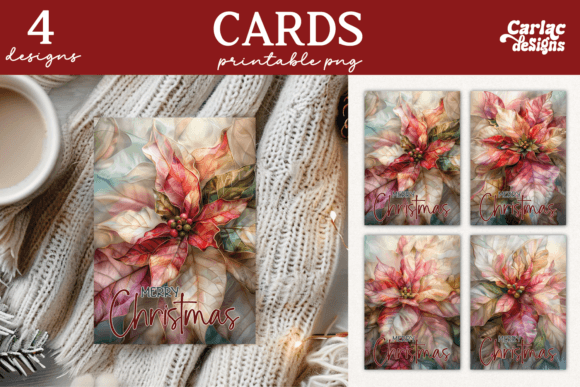
Christmas Printable Cards: A Designer’s Review of Seasonal Illustrations
As a brand designer who has spent years helping local businesses build cohesive visual identities, I approach every new graphic design asset with a mix of curiosity and skepticism. When I first pulled up Christmas Printable Cards, my immediate reaction was not just about the holiday theme, but about how well this illustration could serve as a functional component of real-world small business branding. The market is flooded with generic holiday clipart, so finding an asset that balances festive cheer with professional versatility is rare. In this review, I will break down how these illustrations perform when applied to product packaging, promotional materials, and brand identity systems for local enterprises.
First Impressions: Mood and Brand Personality
The initial aesthetic of Christmas Printable Cards suggests a blend of warmth and structured elegance. It does not scream for attention with neon colors or chaotic layouts; instead, it offers a refined visual hierarchy that feels both inviting and trustworthy. For a boutique owner or a handmade soap maker, this mood is critical. It suggests a brand personality that is thoughtful, curated, and perhaps a bit rustic yet modern.
This illustration style works exceptionally well for businesses aiming for a soft, feminine, or organic feel. It avoids being overly childish, which makes it suitable for higher-end product lines such as artisanal chocolates, luxury candles, or premium skincare sets. The decorative elements are present but do not overpower the space, allowing room for essential text like ingredient lists or brand names. This balance is what separates a simple digital download from a serious design asset capable of elevating small business branding.
Real-World Application in Packaging and Labels
The true test of any graphic design asset is its performance on physical products. I recently conceptualized a rebranding project for a local coffee roastery that wanted to launch a limited-edition holiday blend. We needed visuals that could transition seamlessly from a website banner to a physical bag label without losing impact. Christmas Printable Cards proved to be an excellent candidate for this scenario.
- Product Labels: The resolution and vector-like quality (if available in SVG format) allow for crisp printing on small surfaces. When placed on kraft paper labels, the illustration provided a striking contrast that drew the eye without cluttering the necessary information.
- Packaging Design: For food businesses, visual appeal drives sales. These cards can serve as hero graphics on gift boxes or wrapping paper. They add a layer of professionalism that tells the customer, "This product is cared for."
- Hang Tags: Small businesses often use hang tags to convey story and value. The layout of these illustrations allows for easy integration of taglines or pricing, creating a cohesive look across multiple SKUs.
Beyond food, imagine a florist using these designs on their delivery cards or a candle shop incorporating them into their box inserts. The versatility of the illustration means it can adapt to various textures and materials, from glossy sticker finishes to matte cardstock.
Supporting Business Presentation and Trust
In the world of local commerce, first impressions are everything. Using high-quality design assets directly impacts customer trust. When a consumer sees consistent, polished marketing visuals, they subconsciously associate that quality with the product itself. Christmas Printable Cards help achieve:
- Stronger First Impression: A cohesive holiday campaign looks intentional and established, not thrown together at the last minute.
- Better Product Recognition: By integrating these specific illustrations into your brand palette, you create a recognizable visual cue associated with your seasonal offerings.
- Improved Customer Trust: Professional packaging reduces perceived risk for the buyer. It signals that the business values detail and quality.
Strategic Use Cases for Marketing Visuals
While packaging is crucial, the utility of Christmas Printable Cards extends far beyond the physical box. In today’s digital-first economy, social media managers and creative entrepreneurs need versatile assets that can be repurposed quickly.
These illustrations are perfect for social media graphics. You can use them as background elements for Instagram posts announcing holiday sales, or as overlays for promotional ads. Their clean lines ensure that text remains readable even on mobile screens. Furthermore, for web design purposes, they can be used as decorative accents on landing pages, breaking up large blocks of text and guiding the user’s eye toward call-to-action buttons.
For editorial design projects, such as monthly newsletters or printable catalogs, these cards add a touch of seasonal flair without disrupting the informational flow. They act as visual anchors, making dense content more digestible and engaging.
Where to Exercise Caution
No single asset is a silver bullet. There are specific scenarios where Christmas Printable Cards might not be the best choice. Designers must be mindful of context:
- Formal Corporate Branding: If your client operates in a highly regulated industry like finance or law, these festive illustrations may undermine the seriousness of the brand.
- Crowded Product Packaging: If your label already contains extensive legal disclaimers, ingredients, and barcodes, adding a complex illustration can lead to visual noise. In such cases, simpler patterns or solid color blocks might be safer.
- Luxury Minimalist Brands: Brands that rely on stark minimalism and negative space might find these decorative elements too busy. However, if used sparingly as a subtle watermark, they could still work.
- Low-Contrast Backgrounds: Always preview the asset against your actual background colors. Light-colored illustrations may disappear on pastel backgrounds, reducing their effectiveness.
Practical Notes for the Design Team
Before committing to Christmas Printable Cards for a client project, I recommend running through a quick technical checklist. This ensures the asset integrates smoothly into your workflow and meets commercial standards.
File Format and Editability: Check if the asset is provided as an SVG design or PNG design. An SVG file is ideal because it allows you to scale the illustration without losing quality and edit individual elements to match your brand colors. If it is only a raster image, ensure the resolution is high enough for print (at least 300 DPI).
Color Testing: Do not assume the default colors will work. Test the illustration alongside your brand’s serif font, sans serif font, script font, handwritten font, and display font styles. Sometimes, desaturating the colors or applying a monochromatic filter helps the asset integrate better with existing brand guidelines.
Mockup Validation: Never judge a design asset solely on a white background. Create realistic product mockups. Place the illustration on a coffee bag, a soap wrapper, or a business card. This step reveals issues with spacing, scale, and legibility that are invisible in flat previews.
Commercial Licensing: Finally, verify the commercial license. Ensure you have the right to use the design assets for physical product sales, not just digital distribution. This protects your business from potential legal issues and ensures ethical use of the creator’s work.
Conclusion
For local business owners, handmade sellers, and marketers looking to enhance their seasonal presence, Christmas Printable Cards offer a compelling solution. They bridge the gap between festive decoration and professional branding. By understanding their strengths in packaging, social media, and print, and by respecting their limitations in crowded or formal contexts, designers can leverage these illustrations to create memorable, trustworthy, and visually stunning campaigns. Whether you are updating your product mockups or refreshing your marketing visuals, this asset provides a reliable foundation for a successful holiday season.