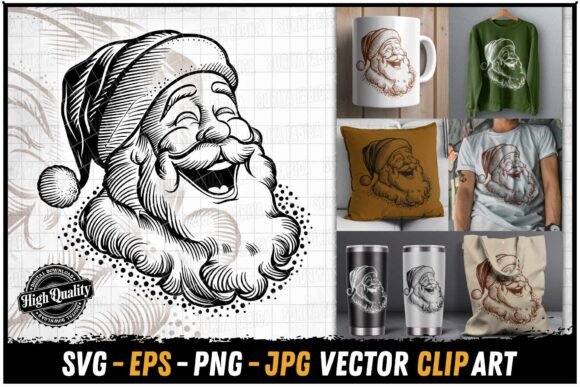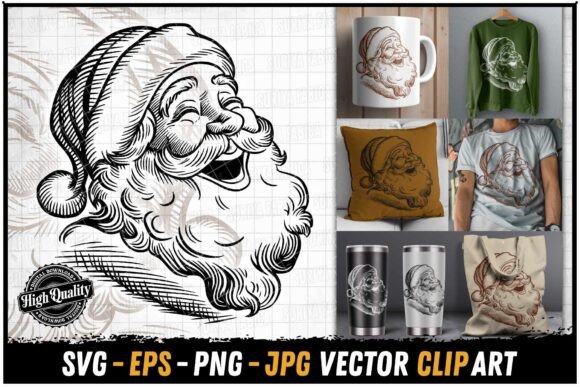
Laughing Santa Sketch Christmas Portrait Review
As a designer who spends half my life staring at hoop frames and the other half trying to convince clients that "handmade" justifies a higher price point, I don’t look at embroidery designs with simple nostalgia. I look at them with skepticism. Will this stitch out cleanly? Is the detail level realistic for a standard machine? Will it look like a boutique item or a discount bin novelty? When I pulled up the Laughing Santa Sketch Christmas Portrait, I didn’t just see a holiday character; I saw a potential bestseller for the upcoming season, provided you execute the production correctly.
This piece falls squarely into the Illustrations category, which immediately sets different expectations than a traditional geometric logo or a dense monogram. The sketch aesthetic is trendy right now—it feels organic, approachable, and less rigid than vector clip art. But in embroidery, "sketchy" can sometimes mean "messy" if the file isn’t digitized with precision. Here is my practical breakdown of how this design performs in real-world applications, from Etsy listings to craft fair tables.
The First Impression: Mood and Visual Personality
The immediate draw of the Laughing Santa Sketch Christmas Portrait is its warmth. Unlike the stern, corporate Santas of the past, this figure radiates joy. For a handmade product, emotional resonance is everything. You aren’t just selling a piece of fabric; you are selling a feeling of comfort and holiday cheer. Visually, the sketch lines suggest movement and texture, which translates surprisingly well to thread work if the stitch types are chosen wisely.
From a design perspective, the layout is balanced. It doesn’t feel cluttered. This is crucial because when you scale this down for a baby onesie or up for a large tote bag, you need to ensure the focal points remain clear. The portrait style lends itself naturally to vertical formats, making it an excellent candidate for items like aprons, kitchen towels, or vertical pillow covers. It has a classic yet modern vibe that fits seamlessly into contemporary home decor trends, appealing to buyers who want festive items that don’t scream "cheap holiday decoration."
Real-World Application: Where This Design Shines
I’ve tested various machine embroidery designs on different substrates, and this particular embroidery file shows remarkable versatility. Here is where I see the highest return on investment for small business owners and hobbyists alike:
- Custom Apparel and Sweatshirts: The sketch style pairs beautifully with heather grey or cream sweatshirts. It avoids the harsh contrast of solid black on black, offering a softer, more premium look. For sweatshirt embroidery, this design works well as a centered chest print or even as a larger back print if your machine supports a larger hoop size.
- Tote Bags and Canvas Items: A tote bag design needs to be durable and legible. The bold outlines typical of sketch styles hold up well on canvas. Whether you are targeting students, shoppers, or gift-givers, this adds a personal touch that plain prints lack. It elevates a basic canvas bag into a handmade product worthy of a higher price tag.
- Kitchen and Home Decor: I envision this looking stunning on linen tea towels or cotton napkins. The holiday embroidery theme is perfect for autumn and winter gifting. Because the design is illustrative, it acts almost like a piece of art rather than just a utility item, increasing its perceived value.
- Baby and Nursery Items: The gentle expression makes this suitable for baby embroidery. On muslin blankets or hooded towels, the soft lines read as cute rather than cartoonish. It’s a great addition to a boutique baby shower gift line.
- Embroidered Patches: If you plan to create embroidered patches for jackets or bags, this portrait format works exceptionally well. The distinct edges make trimming easier, and the expressive face draws the eye even at smaller scales.
Technical Considerations and Potential Pitfalls
No design is without its challenges. While the Laughing Santa Sketch Christmas Portrait is visually appealing, there are specific scenarios where you need to exercise caution. Embroidery is a technical medium, and artistic intent must meet mechanical reality.
Fabric Texture and Stability: Avoid using this design on highly textured fabrics like chunky waffle knits or loose-weave burlap unless you are experienced with stabilizers. The fine lines of the sketch could get lost or distorted. Similarly, stretchy fabrics require a strong cut-away stabilizer to prevent puckering, which would ruin the clean lines of the portrait.
Dense Stitch Areas: Pay close attention to the shading within the sketch. If the digitizer used too much fill stitch density, the fabric may become stiff, especially on thinner materials like t-shirt jerseys. A stiff Santa won’t drape well on a garment. Always check the stitch density in your software before running the full production batch.
Small Details and Lettering: If the design includes tiny text or intricate background elements, test it on scrap fabric first. Fine details can merge together during stitching, turning into a muddy blob. If you are planning to use this for commercial embroidery on caps or hats, remember that curved surfaces can distort straight lines. You may need to adjust the placement or simplify certain elements.
Thread Color Contrast: The success of a sketch design relies heavily on contrast. Using white thread on a white shirt will result in nothing but shadows. Conversely, dark threads on dark fabric can disappear. Choose thread colors that pop against your base fabric. For a true sketch look, consider using multiple shades of grey or silver thread to mimic pencil strokes, but ensure the tonal differences are distinct enough for the machine to register.
Production Notes for the Savvy Maker
To get the most out of this digital embroidery file, follow these practical steps. First, always run a test stitch-out on the actual fabric you intend to use. This allows you to inspect the stitch density, check for any thread breaks, and ensure the hoop size accommodates the design without cutting off critical details.
Second, use a proper stabilizer. For woven fabrics, tear-away might suffice for small projects, but for apparel or items that will be washed frequently, a cut-away stabilizer provides lasting support. For personalized gifts, presentation matters. Ensure your backing is clean and your finishing touches, like trimming excess stabilizer and pressing (if safe for the fabric), are impeccable.
Finally, consider the licensing terms. If you are an Etsy seller or running a craft business, verify whether you have commercial rights to sell finished products made with this design. Some design assets are restricted to personal use only. Assuming you have the rights, this design offers a high-quality foundation for creating memorable finished product lines.
Final Verdict
The Laughing Santa Sketch Christmas Portrait is a strong contender for anyone looking to add a touch of elegance and humor to their holiday inventory. It bridges the gap between traditional holiday imagery and modern illustrative trends. By paying attention to fabric choice, stabilizer usage, and thread contrast, you can transform this digital file into a tangible asset that drives sales and delights customers. It’s not just a Santa; it’s a strategic addition to your embroidery project portfolio.